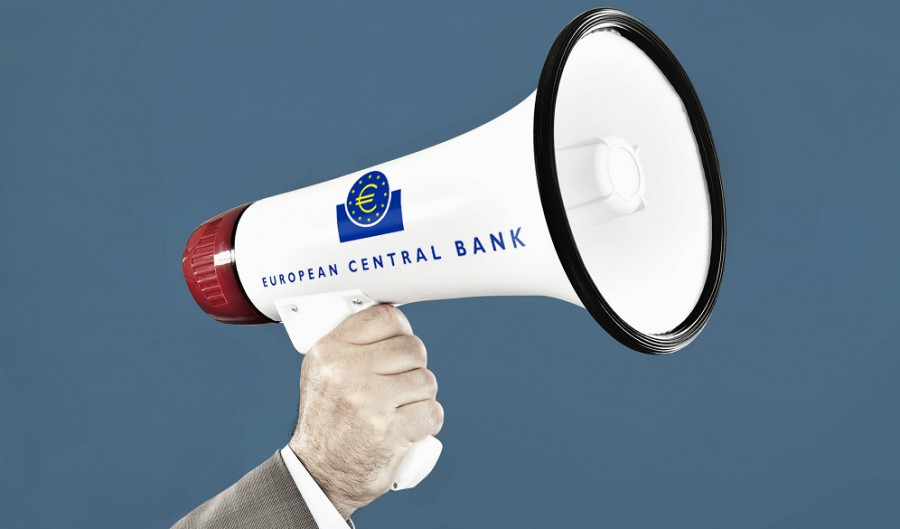
The formal outcome of the European Central Bank's September meeting is effectively predetermined: the central bank will almost certainly raise interest rates by 25 basis points. That base, most likely scenario is already reflected in current prices. Therefore, all traders' attention on EUR/USD will focus on the wording of the accompanying statement and Christine Lagarde's rhetoric. The main question is whether the September hike will be a "precautionary" step or whether the central bank is preparing the ground for another round of monetary tightening.
The current fundamental picture favors a softer, dovish hike, despite headline inflation having accelerated in the eurozone (August HICP rose to 3.3% from 2.9% in July). The devil, as always, is in the details. The energy component jumped to 14.3% in August (from 10.3% in July), while services inflation actually slowed from 3.3% to 3.0%. Core inflation — excluding energy, food, alcohol and tobacco — also eased slightly from 2.5% to 2.4%. This suggests that the recent rise in the headline index is mainly driven by energy, whereas underlying price pressures have not shown comparable momentum.
Germany, the eurozone's largest economy, also shows no signs of broad-based inflation acceleration. In August, consumer prices rose 2.9% year-on-year, while core inflation was 2.4%. Yes, energy prices in Germany jumped 10.5% y/y, but that confirms the main point: the primary inflation impulse is concentrated in energy.
At the same time, the eurozone economy looks fairly resilient. According to Eurostat's revised estimate, the region's GDP grew 0.6% q/q and 1.2% y/y in Q2. Employment rose 0.1% q/q, and unemployment in July held at a relatively low 6.4%, unchanged from the revised June figure.
Recent PMI indices also support the euro. The eurozone composite PMI was 52.0 in August and the services PMI 51.6 — both in expansion territory, reflecting "healthy tendencies" in the currency area. Notably, Germany's manufacturing PMI rose to 54.3 — the highest reading in about 4.5 years. The weak link remains German services (49.7), but new orders, export demand recovery, and renewed hiring have also improved.
It is also important that a dangerous wage–price spiral has not emerged in the European labor market. ECB Governing Council member Olli Rehn recently noted that wage growth and its outlook remain moderate, and clear signs of second-round inflation effects are not visible.
By the way, the ECB's latest collective-bargaining tracker also points to a normalization of wage dynamics: the baseline projection foresees around 2.6% growth in negotiated wages by year-end.
All these fundamental factors favor a "dovish hike." In other words, the central bank is likely to tighten policy settings in September but deliver cautious commentary that offsets much of the hawkish impact.
Recent ECB remarks also support this scenario. Executive Board member Piero Cipollone has repeatedly said policy "must be well calibrated," warning that rate hikes in response to an energy shock "could further weigh on already-hit economic growth." He also emphasized the absence of stagflation signs. His colleague Rehn has highlighted the lack of second-round inflation effects.
The dovish camp's core message is that aggressive rate hikes under current circumstances would only suppress domestic demand and deepen a decline in real GDP already under pressure.
In my view, the "dovish hike" scenario is the most likely. Its realization would put pressure on the euro (including versus the dollar), because a September increase is already priced in.
Yet the intrigue remains. The main obstacle to the dovish outcome is the oil factor, especially given recent Middle East events. Another flare-up in the region has already affected oil markets: Brent trades above $100, raising inflationary risks.
In this context, the ECB's assessment of the inflationary consequences of higher oil prices will be decisive. If the central bank views the shock as temporary and localized, the dovish scenario becomes likelier. But if the ECB sees a risk that high oil prices will feed into wages, services and inflation expectations, its rhetoric could turn markedly tougher.
That is the main suspense of the September meeting. If Christine Lagarde focuses on easing core inflation and the absence of second-round effects, the euro will face significant pressure. If she emphasizes the oil shock, the risk of inflation staying above 3% and the need for further tightening, the euro would regain the upper hand — and so would EUR/USD buyers.
Overall, I lean toward the first scenario. Still, opening short positions on the pair now is as risky as going long, because the meeting's outcome remains uncertain.















 コンタクトする