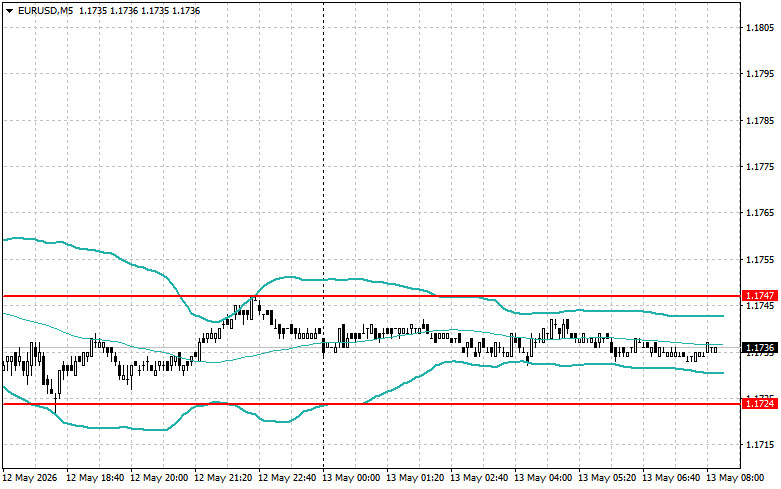
Demand for the US dollar has not abated, and in the second half of the day, it even increased, leading to another sell-off of risk assets.
The euro declined in the first half of the day amid weak Eurozone data. News that the main Consumer Price Index (CPI) in the US rose by 0.6% in April, and that the core index, excluding food and energy costs, increased by 0.4%, also put pressure on the euro, pound, and other risk assets during American trading.
These data raise serious concerns about the further development of inflationary pressures in the world's largest economy. The ongoing rise in the CPI indicates that inflationary pressure is not only not easing but may be accelerating, despite the Federal Reserve's measures to curb price growth. The increase in the core index, which is considered a more accurate indicator of sustained inflation, is particularly troubling for analysts. The 0.4% figure exceeded expectations, suggesting deeper, more systemic issues than previously thought.
Today, the first half of the day promises to be rich in economic news from the Eurozone. Revised data on first-quarter GDP growth are expected to be released. These figures are a key indicator of the region's economic health and could significantly adjust current forecasts. A minimal growth rate of 0.1% does not reassure about the Eurozone's future prospects.
Simultaneously with the GDP data, figures characterizing the dynamics of industrial production will be published. This indicator reflects activity in the manufacturing sector, which plays an important role in the Eurozone economy. It is expected that the change in industrial production will provide a clearer picture of current production capacities and the potential for future growth, which is at risk due to high inflation stemming from the situation in the Middle East.
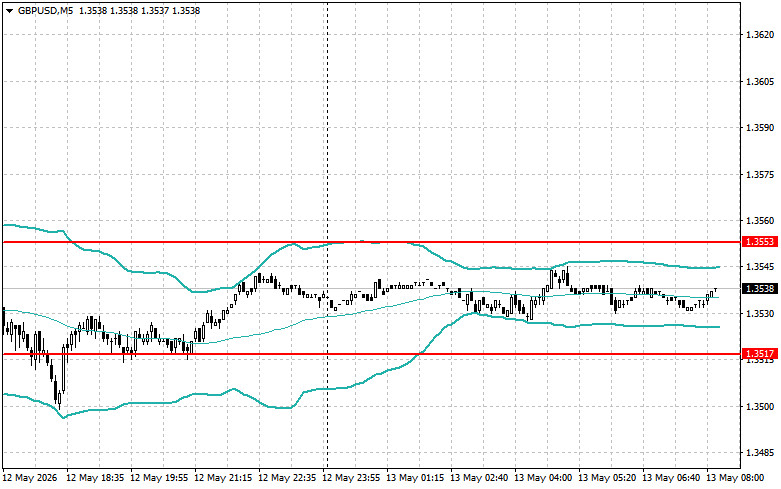
As for the pound, there are no surprises in the UK's economic calendar this morning. The main event market participants will be paying attention to is a speech by Catherine L. Mann, a member of the Bank of England's Monetary Policy Committee. Mann's words may shed light on the BoE's current assessments of the British economy and, more importantly, on its vision for the future trajectory of monetary policy. In the context of ongoing inflationary uncertainty and global economic challenges, any hints of an interest rate increase will be closely watched.
If the data aligns with economists' expectations, it is better to act using the Mean Reversion strategy. If the data significantly exceeds or falls short of economists' expectations, it is best to use the Momentum strategy.
SZYBKIE LINKI




















 Skontaktuj się z ForexMart